
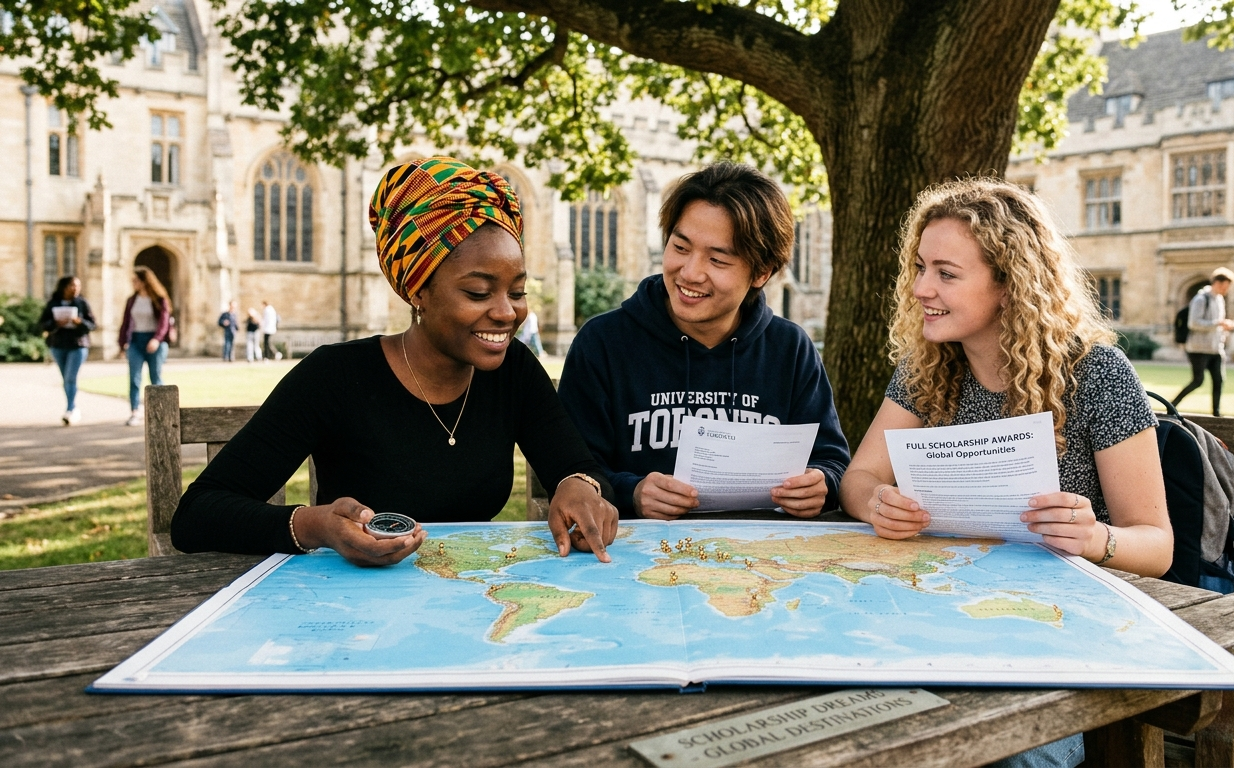
Common Scholarship Application Mistakes
1. Applying Without Reading the Eligibility Requirements
This wastes time and can lead to automatic rejection.
2. Missing the Deadline
A strong application submitted after the deadline is usually still a late application.
3. Using False Information
Never exaggerate your qualifications or fabricate experience.
4. Copying Scholarship Essays
Your application should reflect your own experiences.
5. Ignoring the Scholarship’s Mission
Your application should explain why your goals align with the programme.
6. Submitting an Untailored Personal Statement
Different scholarships prioritize different qualities.
7. Failing to Proofread
Errors can make an otherwise strong application appear careless.
8. Waiting Until the Last Day
Technical problems, missing documents and internet issues can cause unnecessary stress.
Can You Use AI to Write a Scholarship Application?
This requires particular caution in 2026.
Scholarship providers are increasingly publishing explicit rules about artificial intelligence.
For example, the Australian Government’s 2026 Australia Awards guidance states that applicants may use AI for basic tasks such as spelling, grammar and organizing ideas, but must not use AI to write, improve or paraphrase any part of the application. The government says responses must be the applicant’s own original work and misuse may lead to disqualification. (DFAT)
This is an important lesson:
Never assume that because an AI tool can write an essay, a scholarship provider allows you to submit AI-generated content.
Always check the specific scholarship’s rules.
If AI assistance is permitted, use it only within the boundaries established by the provider.
How to Avoid Scholarship Scams
Scholarship scams often target international students because applicants are actively searching for financial assistance.
Be suspicious of websites or individuals who:
- Guarantee a scholarship
- Demand payment to “release” scholarship money
- Ask for unnecessary banking passwords
- Promise admission without an application
- Claim to work for a government without verification
- Ask you to pay for a scholarship certificate
- Demand cryptocurrency or unusual payment methods
- Tell you to keep the process secret
A legitimate scholarship may have an application fee in some circumstances, but you should verify this directly through the official provider.
Never transfer money simply because someone claims that you have won a scholarship.
Official Scholarship Resources
The following resources are useful starting points for international students.
| Scholarship/Resource | Country/Region | Main Purpose | Official Resource |
|---|---|---|---|
| Chevening | UK | Fully funded master’s scholarships | Official Chevening website |
| Fulbright Foreign Student Program | USA | Graduate study/research | Official Fulbright Foreign Student Program |
| Erasmus Mundus | Europe | Joint master’s programmes | Official Erasmus Mundus information |
| DAAD | Germany | Study and research funding | DAAD Scholarship Database |
| MEXT | Japan | Japanese Government scholarships | MEXT official scholarship information |
| GKS | South Korea | Korean Government scholarships | Study in Korea official portal |
| Australia Awards | Australia | Undergraduate/postgraduate study | Australia Awards official website |
| Commonwealth Scholarships | UK/Commonwealth | Scholarships for eligible Commonwealth citizens | Commonwealth Scholarship Commission |
Scholarship Application Timeline for 2026-2027
Because scholarship deadlines vary, there is no universal application calendar.
However, a practical timeline looks like this:
August-September 2026
Focus on scholarships with open or upcoming application windows.
For example, Chevening’s 2027-28 application window is open from August 4 to October 6, 2026. (Chevening)
September-November 2026
Continue checking:
- University scholarships
- Erasmus Mundus programmes
- DAAD opportunities
- Government scholarships
- Master’s and PhD funding
Late 2026-Early 2027
Many university and international scholarship programmes may have deadlines during this period.
Throughout 2027
Continue monitoring scholarship databases because different programmes operate on different academic calendars.
A Better Way to Search for Scholarships
Instead of searching Google randomly for:
“100% free scholarship abroad”
use specific searches.
Examples include:
- Fully funded master’s scholarships for international students
- Fully funded PhD scholarships 2027
- Government scholarships for Nigerian students
- Fully funded scholarships in Germany
- Fully funded scholarships in the UK
- Erasmus Mundus scholarships 2027
- DAAD scholarships for international students
- MEXT scholarship application
- GKS scholarship international students
- Fully funded scholarships for African students
Then verify the results through the official programme website.
How to Choose the Right Scholarship
The biggest scholarship is not necessarily the best scholarship for you.
Consider:
Academic Fit
Does the scholarship support your intended degree and field?
Financial Fit
Does the funding cover the expenses you actually need?
Eligibility
Are you from an eligible country?
Career Fit
Will the programme move you toward your long-term career?
Location
Are you prepared to study and live in that country?
Obligations
Does the scholarship require you to return home or meet other conditions?
Application Requirements
Can you realistically provide the required documents before the deadline?
Final Scholarship Application Checklist
Before submitting an application, confirm:
Eligibility
- My nationality is eligible.
- My degree level is eligible.
- My academic background meets the requirements.
- My field of study is eligible.
- I meet any age or experience requirements.
- I meet language requirements where applicable.
Documents
- Passport or identification document
- Academic transcripts
- Degree certificates
- CV
- Personal statement
- Recommendation letters
- Research proposal, if required
- Language test results, if required
- Other supporting documents
Final Review
- I answered every question.
- My information is accurate.
- My essays are original.
- I followed the scholarship’s AI policy.
- My references have been submitted.
- My documents are in the correct format.
- I submitted before the deadline.
- I saved proof of submission.
Frequently Asked Questions
What are the best fully funded scholarships for international students in 2026?
Major programmes worth researching include Chevening, Fulbright, Erasmus Mundus Joint Masters, DAAD scholarships, MEXT, GKS, Australia Awards and relevant Commonwealth scholarships. Eligibility and funding vary by programme. (Chevening)
Which country offers the most fully funded scholarships?
There is no reliable single answer.
Different countries offer different government, university and research funding programmes. The number of scholarships also changes from year to year.
It is better to search based on your degree, field, nationality and eligibility than to choose a country simply because it appears to offer the most scholarships.
Can Nigerian students get fully funded scholarships abroad?
Yes.
Nigerian citizens are eligible for various international scholarship programmes, depending on the specific programme’s requirements. Nigeria is, for example, listed among the participating African countries for Australia Awards Scholarships. (DFAT)
Chevening also maintains a specific Nigeria scholarship programme page. (Chevening)
Can I get a fully funded scholarship without work experience?
It depends on the scholarship.
Some programmes are designed primarily for recent graduates, while others require professional experience.
Chevening, for example, has specific work-experience and eligibility requirements, so applicants should check the current rules before applying. (Chevening)
Are fully funded scholarships available for undergraduate students?
Yes, although they can be less common than master’s and doctoral funding.
MEXT and GKS are examples of government scholarship programmes that can include undergraduate opportunities depending on the annual call. (MEXT)
Are there fully funded scholarships for master’s students?
Yes.
Some major master’s-level opportunities include:
- Chevening
- Erasmus Mundus Joint Masters
- Selected Commonwealth scholarships
- DAAD programmes
- MEXT
- GKS
- Australia Awards, depending on country and programme
Are there fully funded PhD scholarships?
Yes.
PhD applicants can find funding through government scholarships, university-funded doctoral positions and research grants.
DAAD, Fulbright and MEXT are among the major programmes worth researching, although each has different eligibility requirements.
Is IELTS required for every fully funded scholarship?
No.
Language requirements differ between scholarship providers, universities and programmes.
Some applicants may qualify for alternatives or exemptions, while others must submit an approved English-language test.
Always verify the requirement for the specific scholarship and university.
Can I apply for several scholarships at the same time?
Generally, applying to several scholarships is possible, provided you meet their requirements and comply with their individual rules.
Applying strategically to multiple suitable opportunities can be sensible because fully funded scholarships are highly competitive.
Do I have to pay money to apply for a scholarship?
Not necessarily.
Many legitimate government scholarship programmes do not charge a scholarship application fee, but requirements vary.
Never pay an individual who promises to guarantee a scholarship.
Verify any fee directly through the official scholarship provider.
Final Thoughts
A fully funded scholarship can dramatically reduce the financial barrier to studying abroad, but finding one requires more than searching for a list of “free scholarships.”
The most important step is verification.
Scholarship deadlines, eligible countries, degree requirements, funding packages and application procedures can change. A scholarship that was open last year may be closed this year, while another programme may have changed its eligibility rules.
As of August 2026, Chevening’s 2027-28 application cycle is particularly relevant because applications opened on August 4, 2026 and are scheduled to close on October 6, 2026. (Chevening)
Other major programmes operate on different calendars. Australia Awards’ 2027 African application round, for example, closed on April 30, 2026, while the 2026 GKS graduate selection has already reached its final results stage. (DFAT)
This is why students should treat scholarship searching as an ongoing process.
Create a list of suitable programmes, monitor official websites, prepare your documents early and tailor every application to the scholarship’s objectives.
Most importantly, do not judge a scholarship solely by the phrase “fully funded.” Read exactly what the award covers, understand its conditions and verify the information directly with the organization responsible for the scholarship.
A well-prepared applicant does not simply apply to many scholarships.
They apply to the right scholarships, with a strong application, before the deadline.
Continue Reading
How to Prepare for a Scholarship Interview: Complete 2026 Success Guide
How to Write a Scholarship Essay: Complete 2026 Guide to Winning More Scholarships
Canadian Resume Format Explained: How to Write a CV That Gets Interviews (2026 Guide)
Canada Visa Latest Updates 2026: Work Permit IRCC updates
Canada Visa Interview Guide (2026): Questions/answers tips
Canadian Resume Format Explained: How to Write a CV That Gets Interviews (2026 Guide)
How to Move Abroad Legally Without an Agent (DIY Relocation Guide)
How to Identify Fake Scholarship Websites in 2026: 15 Warning Signs You Should Never Ignore